


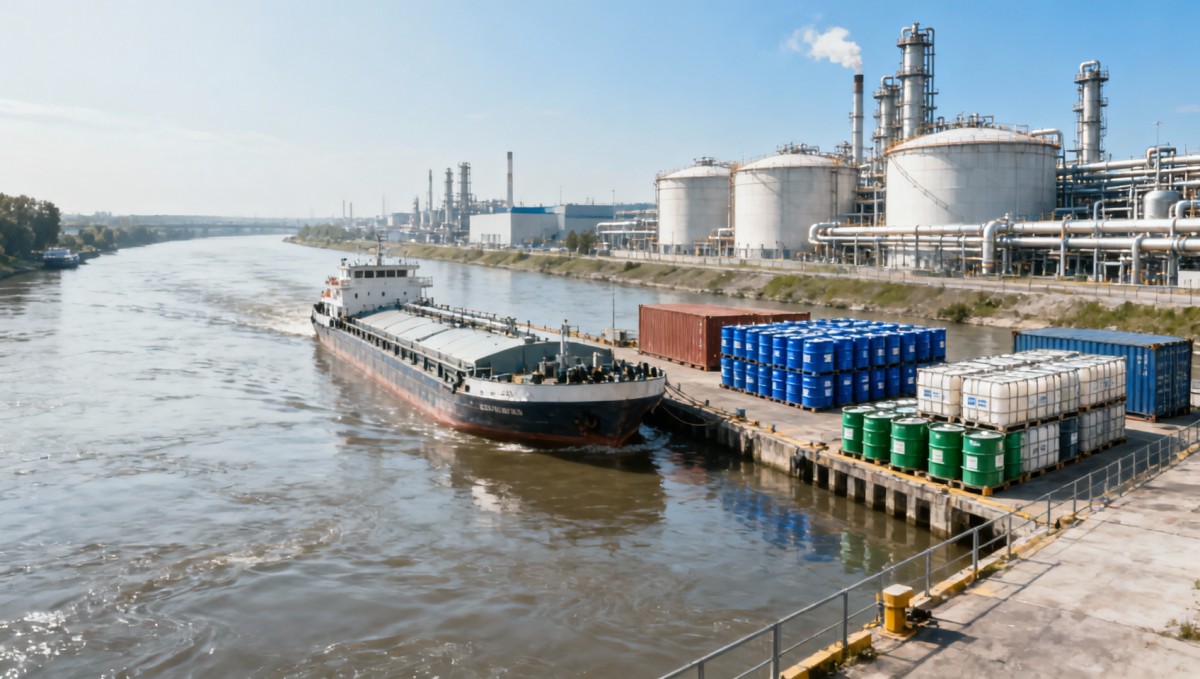
On August 5, 2026, the water level of the Rhine at Kaub fell to 20 cm, reaching a historic low, and significantly disrupting Europe's chemical logistics and procurement chains. According to the information provided, BASF, Covestro, LANXESS and other companies have issued force majeure notices. The local supply of key chemicals such as polyether polyols and vitamins in Europe has been restricted, freight costs have risen simultaneously, and delays in raw material arrivals have intensified. For Chinese exporters, this is more appropriately understood as a temporary window created by tighter transportation and delivery rules, particularly affecting procurement, delivery, trade terms and performance arrangements.
Supply disruptions triggered by Rhine water levels have already reached the procurement side
The core facts of this event are as follows: on August 5, 2026, the water level of the Rhine at Kaub fell to 20 cm, setting a new historic low; BASF, Covestro, LANXESS and other companies successively issued force majeure notices; the local supply of product categories such as polyether polyols and vitamins in Europe has been significantly restricted; and freight costs have risen to EUR 200/ton, while delays in raw material arrivals have further intensified.
Who will feel the changes first
Direct trading companies: delivery schedules and terms will be recalculated first
For direct trading companies, the first areas affected are quotation validity periods, shipping schedules and delivery commitments. After freight costs rise to EUR 200/ton, the logistics and landed costs included in quotations need to be recalculated. At the same time, force majeure notices mean that some contractual performance arrangements may need to be reconfirmed. The analysis indicates that subsequent orders will require closer attention to the port of shipment, arrival time, responsibility for delays and the documentary alignment of alternative transportation methods.
Buyers: replenishment logic may shift from “cost optimization” to “deliverability first”
For European buyers, restricted local supplies of polyether polyols and vitamins mean that procurement decisions may place greater emphasis on delivery stability rather than simply comparing prices. The issues that deserve greater attention now are whether procurement plans need to be brought forward, whether safety stocks need to be increased, and whether existing suppliers can still meet the established delivery windows. For procurement processes, supplier qualifications, alternative sources and arrival verification will all become more sensitive.
Processing and manufacturing companies: delays in raw material arrivals will squeeze production scheduling
For processing and manufacturing companies that rely on the relevant raw materials, the challenge is not just a single price increase, but disruption to production continuity and customer delivery schedules. From an analytical perspective, raw material delays will first affect production start arrangements and then pass through to finished-product delivery times and downstream delivery responsibilities. If a company is involved in certification, quality traceability or fixed-formula management, it will also need to verify whether alternative raw materials will trigger requirements for updates to internal technical documents, testing records or customer approvals.
Export companies: for soft-foam polyether, the window of opportunity places greater emphasis on performance capability
According to the information provided, China's soft-foam polyether exports increased by 21% year on year in the first half of 2026 and are currently in a window in which delivery priority and premium acceptance are important. For export companies, this change is more like an execution signal following the transfer of market orders outward, rather than confirmation of a long-term trend. The key issue is not only whether orders can be accepted, but also whether contracts, shipment, customs declaration and delivery can be completed reliably. If European buyers accelerate order transfers in the future, companies will need to examine their production capacity, vessel schedules, credit terms and customer acceptance requirements more rigorously.
Whether orders can be implemented depends on documentation, delivery and alternatives
Contracts and documents must first be aligned with force majeure circumstances
The fact that force majeure notices have been issued means that, in contract management, companies cannot focus only on price changes. They must also verify clauses concerning force majeure, delayed delivery, partial shipments and exemptions from liability. For orders currently being executed, it is recommended to focus on checking whether shipping documents, arrival milestones, claim conditions and notification obligations need to be reconfirmed. This situation is more appropriately handled through risk verification and should not be directly regarded as meaning that all orders will automatically be exempt from liability.
Alternative logistics and alternative sources need to be verified as soon as possible
Low water levels on the Rhine affect the transportation conditions themselves, so the feasibility of alternative logistics solutions will determine subsequent execution efficiency. For trading and supply chain teams, the focus should not be on abstractly discussing “finding alternative routes,” but on verifying whether the transit time, cost, loading capacity and relevant documentation requirements of alternative routes are compatible. If alternative suppliers or origins are involved, it will also be necessary to assess whether they could affect customer certification, quality documents or existing procurement standards.
Key product categories require close monitoring of delivery priorities
Based on the known circumstances, polyether polyols and vitamins are both currently restricted product categories. For companies that still have European orders on hand, the more practical action at present is to establish priorities and place orders with high contractual constraints, high delivery-time sensitivity and high customer dependence under focused monitoring first. At this stage, the greatest risk is interpreting “market tailwinds” too broadly while overlooking specific batches, specific vessel schedules and specific delivery responsibilities.
This is more like an execution signal than a change that has already ended
From an industry perspective, this information is more appropriately understood as a clear execution signal: tighter transportation conditions have begun to change the trading pace and performance methods for chemical products, while restricted local supply in Europe is being transmitted to procurement, quotation and delivery processes. This is not an abstract discussion of rules, but market feedback resulting from the combined effects of rules and real-world conditions.
What still requires continued observation is how the force majeure notices will subsequently be applied to specific contracts, specific batches and specific trade arrangements, and whether high freight costs and delays will continue over a longer period. For corporate decision-making, the most important point is not to reach conclusions prematurely, but to continuously verify execution guidelines, customer confirmations and the recovery of logistics operations.How should this information be understood at present
Overall, this event reflects the real impact of low water levels on the Rhine on chemical imports and performance rules in Europe, while also opening a temporary opportunity for relevant Chinese export categories to fill the gap. For the industry, the more appropriate approach is not simply to judge whether prices will rise or fall, but to view this as a market reallocation process following tighter supply chain execution conditions. Going forward, the scope of the impact will still be determined by the speed of delivery recovery, the interpretation of contract performance and whether buyers continue to adjust their supply strategies.
What information was used to compile this article
This article was compiled based on the information title, event date and event summary provided by the user, without using unverified external details. Reference information usually related to such events includes official announcements, releases from regulatory authorities, information from customs or trade authorities, industry association information, standards organization documents and reports from authoritative media. Since no specific official source links were provided in the input, the original links cannot be listed in this article. Continued verification of policy details, certification implementation guidelines, trade execution and industry feedback will still be required.

Listen to every customer's voice